



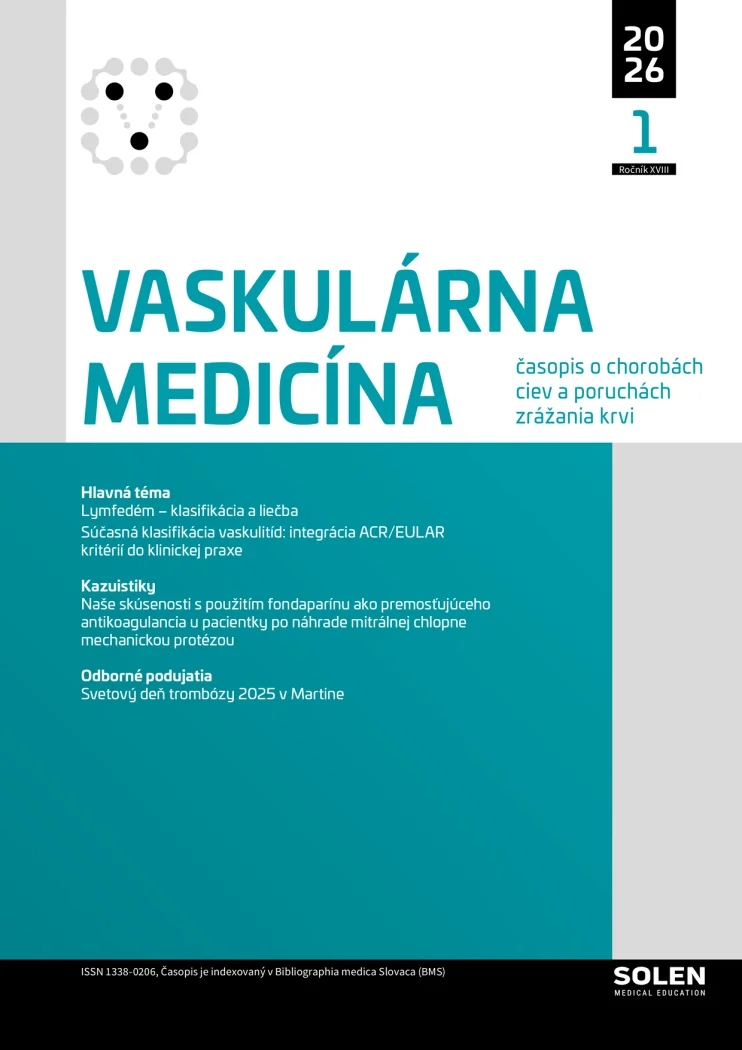
Vaskulárna medicína 2/2025
Mezenterická ischémia – diagnostika a liečba. Retrográdny pohľad na naše skúsenosti
MUDr. Kristína Kadlečíková, MUDr. Ján Hruškovič, MUDr. Ivan Bedevelskyy, MUDr. Jaroslav Galko, MUDr. Martin Duchoň, MUDr. Zdenka Milá, MUDr. Peter Mondek, PhD., MSc.
Úvod/Cieľ: Mezenterická ischémia predstavuje závažné akútne alebo chronické nedokrvenie rôznych častí čreva v dôsledku postihnutia viscerálnych ciev. Cieľom práce bolo analyzovať klinické skúsenosti Oddelenia cievnej chirurgie FN Nitra s liečbou akútnej (AMI) a chronickej mezenterickej ischémie (CMI) v rokoch 2017 – 2024 a porovnať ich s najnovšími odporúčaniami ESVS (Európska spoločnosť pre cievnu chirurgiu). Retrospektívna observačná „single centre“ štúdia.
Súbor pacientov a metódy: Retrospektívne boli analyzovaní pacienti s AMI a CMI. Zhodnotený bol klinický obraz, komorbidity, diagnostický prístup, typ liečby (endovaskulárna vs. chirurgická) a výsledky liečby. Zhodnotili sme mortalitu a priechodnosť rekonštrukcií pri chirurgickej, endovaskulárnej liečbe (EVL) a ROMS (retrograde open mesenteric stenting). Liečba a výsledky pacientov boli porovnané s aktuálnymi odporúčaniami ESVS.
Výsledky: Z celkového počtu 28 pacientov (17 žien, 11 mužov) bolo 12 liečených pre AMI a 16 pre CMI. EVL dominovala nad chirurgickými intervenciami. Mortalita pri AMI ostáva vysoká, najmä pri neskorej diagnostike. Pri CMI bola EVL metódou voľby u všetkých pacientov. Chirurgická liečba bola indikovaná u pacientov s chronickým uzáverom viscerálnych tepien bez možnosti EVL a so symptomatickým uzáverom stentu v AMS.
Záver: Dôležitým predpokladom úspešnej liečby je včasné klinické potvrdenie diagnózy, ideálne pomocou CTA vyšetrenia a úzka interdisciplinárna spolupráca.
Kľúčové slová: akútna mezenterická ischémia, chronická mezenterická ischémia, endovaskulárna liečba, chirurgická revaskularizácia, ROMS (retrograde open mesenteric stenting)
Mesenteric ischemia - diagnosis and management: a retrospective review of our experience
Introduction/Aim: Mesenteric ischemia represents a serious acute or chronic insufficient of blood supply to various parts of the intestine due to involvement of the visceral vessels. The aim of this study was to analyze the clinical experience of the Department of Vascular Surgery at the Faculty Hospital Nitra in the treatment of acute mesenteric ischemia (AMI) and chronic mesenteric ischemia (CMI) between 2017 and 2024, and to compare the results with the latest guidelines from the European Society for Vascular Surgery (ESVS). Retrospective observational single-centre study.
Patient Group and Methods: We retrospectively analyzed patients with AMI and CMI. Clinical presentation, comorbidities, diagnostic approach, type of treatment (endovascular vs. surgical), and treatment outcomes were assessed. Mortality and graft patency were evaluated in surgical, endovascular, and ROMS procedures. Patient management and outcomes were compared with current ESVS guidelines.
Results: Out of a total of 28 patients (17 women, 11 men), 12 were treated for AMI and 16 for CMI. Endovascular treatment (EVL) predominated over surgical interventions. Mortality in AMI remains high, especially in cases of delayed diagnosis. For CMI, EVL was the treatment of choice in all patients. Surgical treatment was indicated for patients with chronic occlusion of the visceral arteries where EVL was not feasible, or with symptomatic stent occlusion in the superior mesenteric artery.
Conclusion: A crucial prerequisite for successful treatment is early clinical confirmation of the diagnosis, ideally using CTA, and close interdisciplinary collaboration.
Keywords: acute mesenteric ischemia, chronic mesenteric ischemia, endovascular treatment, surgical revascularization, ROMS (retrograde open mesenteric stenting)