




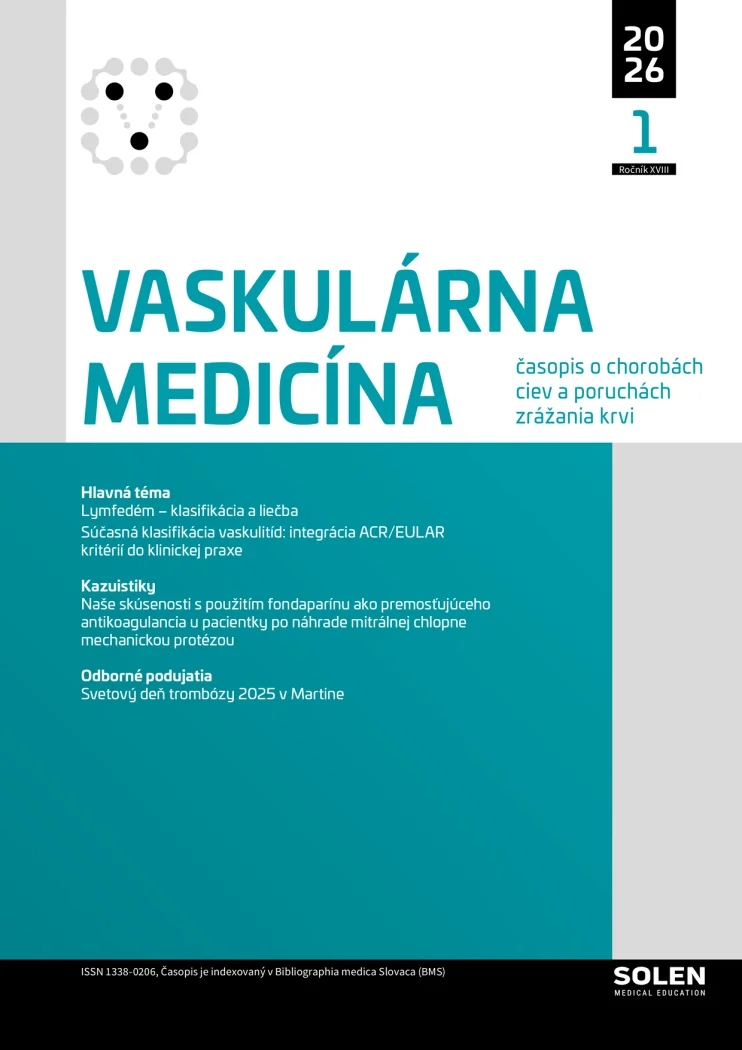
Vaskulárna medicína 2/2019
Dlhodobé výsledky revaskularizačnej liečby kritickej končatinovej ischémie
MUDr. Peter Beňo, MUDr. František Rusňák, MUDr. Milan Podolec
Cieľ: Cieľom práce je vyhodnotiť výsledky liečby kritickej končatinovej ischémie (CLI) na našom pracovisku za obdobie 2011 – 2015 a stanoviť miesto otvorenej chirurgickej revaskularizácie v manažmente liečby CLI. Štatisticky spracovať súbor so zameraním jednak na zastúpenie jednotlivých liečebných modalít a ich kombinácií, a jednak na početnosť tepnových rekonštrukcií v jednotlivých segmentoch tepnového riečiska. V skupine chirurgických revaskularizácií vyhodnotiť výsledky liečby v jednotlivých podsúboroch v zmysle doby priechodnosti tepnových rekonštrukcií, resp. záchrany končatiny a porovnať naše výsledky s výsledkami udávanými v literatúre. Ďalším cieľom tejto práce je identifikovať všetky faktory ovplyvňujúce výsledky chirurgickej revaskularizačnej liečby CLI a stanovenie miery ich vplyvu na dlhodobú priechodnosť tepnových rekonštrukcií. V neposlednom rade je ambíciou tejto práce vyhodnotiť v literatúre málo zdôrazňovaný časový faktor a preukázať vplyv oneskorenej revaskularizácie kriticky ischemickej končatiny na výsledky liečby CLI. Úvod: Kritická končatinová ischémia predstavuje závažný celosvetový medicínsky, ale aj socio-ekonomický problém nielen ohrozením, resp. stratou dolnej končatiny, ale aj vysokou dlhodobou kardiovaskulárnou mortalitou. Preto je CLI v súčasnej vaskulárnej medicíne oblasťou intenzívneho záujmu tak výskumného, ako aj klinického. Základným atribútom úspešnosti liečby CLI je jednak požiadavka na jej komplexnosť založenej na multidisciplinárnom konsenze všetkých zainteresovaných vaskulárnych špecialistov, a jednak na jej včasnosť. Materiál a metodika: V našom súbore v rokoch 2011 – 2015 bolo 109 chirurgicky liečených pacientov s CLI. Retrospektívnou analýzou anamnestických údajov trvania CLI, tzn. od objavenia príznakov po vykonanú revaskularizačnú liečbu, boli pacienti rozdelení do skupín podľa včasnosti poskytnutej chirurgickej revaskularizačnej liečby. Porovnanie sme vykonali v troch nami stanovených kategóriách, a to 1. prítomnosť, resp. neprítomnosť defektu, 2. obdobie trvania kritickej ischémie a 3. obdobie trvania trofického defektu. Na základe výsledkov liečby v skupinách sme sa snažili stanoviť význam vplyvu časového faktora na úspešnosť revaskularizácie z hľadiska priechodnosti rekonštrukcie a záchrany končatiny. Záver: Úspešnosť chirurgickej revaskularizácie kriticky ischemickej končatiny je determinovaná rôznymi faktormi, ako sú morfológia a distribúcia aterosklerotického postihnutia, lokalizácia a typ rekonštrukčného výkonu, voľba cievnej náhrady, ale aj vek, komorbidita, compliance pacienta, atď. Avšak v neposlednom rade aj dobrý timing revaskularizačnej liečby bez zbytočných časových strát.
Kľúčové slová: chirurgická liečba, periférne arteriálne ochorenie dolných končatín, kritická končatinová ischémia, indikácie chirurgickej liečby
Long-term results of revascularization treatment of critical limb ischemia
Goal: The main purpose of this study is to evaluate the results of critical limb ischemia (CLI) treatment at our workplace between 2011 and 2015, and to determine the place of open surgical revascularization in the management of CLI treatment. Moreover, the study statistically elaborates the file focusing on the representation of individual therapeutic modalities and their combinations and on the frequency of arterial reconstructions in individual segments of the arterial bed. In the group of surgical revascularizations we evaluated the results of the treatment in terms of time of the arterial reconstruction, respectively in terms of the limb salvage and compared our results with the results reported in the literature. Another aim of this study is to identify all factors influencing the results of CLI revascularization treatment and to determine the extent of their influence on the long-term patency of arterial reconstructions. Last but not least ambition of this study is to evaluate underestimated time factor and to demonstrate the effect of delayed revascularization of the critical ischemic limb on the results of CLI treatment. Introduction: Critical limb ischemia has been considered to be one of the most serious medical, social and economic problem not only because of threat of the limb loss, but also because of the high long-term cardiovascular mortality. Therefore, CLI is currently very popular in the field of vascular medicine, as the subject of the research as well as a clinic problem. The basic conditions for the successful treatment of CLI are: complexity of the treatment based on the multidisciplinary consensus of all interested vascular specialists and its timeliness. Material and Methods: There were 109 surgically treated patients with CLI between 2011 and 2015 in our file. By retrospective analysis of CLI duration history data, patients were divided into two groups according to the timeliness of surgical revascularization treatment. Based on the results of the treatment in both groups, we tried to determine the impact of the time on the success of the revascularization in terms of the patency of the reconstruction and the salvage of the limb. Conclusion: The success of surgical revascularization of the critically ischemic limb is determined by various factors such as morphology and distribution of atherosclerotic disability, localization and type of reconstructive performance, choice of vascular conduit, but also age, comorbidity, patient compliance, etc. However, good timing of revascularization treatment without unnecessary time loss is also very important.
Keywords: surgical treatment, peripheral arterial disease, critical limb ischemia, indications for surgical interventions