

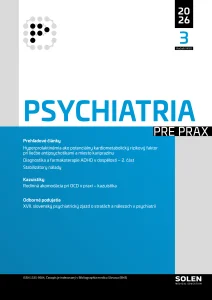
Psychiatria pre prax 3/2026
Rodinná akomodácia pri OCD v praxi – kazuistika
MUDr. Katarína Vajdová, doc. MUDr. Jana Trebatická, PhD.
Obsedantno-kompulzívna porucha (OCD) v detskom veku predstavuje komplexnú neuropsychiatrickú diagnózu. U detí je klinický obraz úzko prepojený s dynamikou rodinného prostredia. Kľúčovým udržiavacím faktorom je rodinná akomodácia – snaha blízkych zmierniť úzkosť dieťaťa zapájaním sa do rituálov, uisťovaním či úpravou režimu domácnosti. Hoci rodinná akomodácia krátkodobo znižuje distres, z dlhodobého hľadiska funguje ako negatívne posilnenie – bráni habituácii (prirodzenému poklesu úzkosti), fixuje symptómy a znižuje efektivitu psychoterapie a farmakoterapie. Situáciu značne komplikuje komorbidita s poruchami autistického spektra (PAS). Prekrývanie rigidného a repetitívneho správania sťažuje diferenciálne diagnostické odlíšenie obsedantno-kompulzívnych prejavov od autistických stereotypií. Narušenie rituálu často vyvoláva afektívny raptus, heteroagresiu a sociálnu izoláciu, čím vzniká bludný kruh, v ktorom sa snaha rodiny o pomoc mení na bariéru brániacu pokroku v liečbe. Tento dlhodobý tlak vyúsťuje do vyčerpania opatrovateľov (caregiver burnout). Vyčerpaná rodina nedokáže dôsledne dodržiavať nevyhnutné režimové opatrenia a hranice, ktoré sú v domácom prostredí kľúčové pre dosiahnutie a udržanie remisie. V príspevku predkladáme kazuistiku 12-ročnej pacientky so závažným priebehom zmiešanej obsedantno-kompulzívnej poruchy s komorbídnou poruchou autistického spektra. Táto kazuistika otvára dôležité témy, ako sú hranica medzi pomocou a traumatizáciou v rodine, limity farmakoterapie pri nespolupráci v domácom prostredí a etické dilemy pri liečbe pacientov s nízkou motiváciou rodiny k dlhodobej spolupráci.
Kľúčové slová: OCD, rituály, heteroagresia, non-compliance, Aspergerov syndróm
Family accommodation in OCD – a case study
Obsessive-compulsive disorder (OCD) in childhood represents a complex neuropsychiatric diagnosis. In children, the clinical picture is closely intertwined with the dynamics of the family environment. A key maintaining factor is family accommodation
- the effort of loved ones to alleviate the childʼs anxiety through participation in rituals, reassurance, or adjustments to the household routine. Although family accommodation reduces distress in the short term, in the long term it functions as negative reinforcement, preventing habituation (the natural decline of anxiety), maintaining symptoms, and reducing the efficacy of psychotherapy and pharmacotherapy. The situation is significantly complicated by comorbidity with pervasive developmental disorders. The overlap of rigid and repetitive behaviors complicates the differential diagnosis between obsessions and autistic stereotypies. The disruption of a ritual frequently triggers affective outbursts, heteroaggression, and social isolation, creating a vicious cycle in which the familyʼs effort to help turns into a barrier hindering treatment progress. This prolonged pressure results in caregiver burnout. An exhausted family is unable to consistently adhere to the necessary treatment recommendations and boundaries, which are crucial in the home environment for successful remission. In this paper, we present a case study of a 12-year-old female patient with a severe course of mixed obsessive-compulsive disorder with comorbid pervasive developmental disorder. This case study opens important topics such as the boundary between help and traumatization within the family, the limits of pharmacotherapy in the case of non-compliance in the home environment, and ethical dilemmas in the treatment of patients with low family motivation to engage in long-term treatment.
Keywords: OCD, rituals, heteroaggression, non-compliance, Aspergerʼs syndrome

