

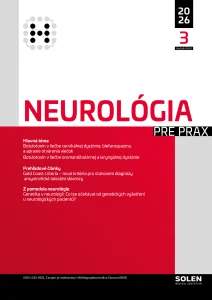


Neurológia pre prax 6/2025
Léčba migrény u ženy
MUDr. Radka Marková, MUDr. Halina Hevková
Migréna je chronické neurologické onemocnění, které postihuje 15–20 % žen v reprodukčním věku. Léčba migrény u ženy zahrnuje specifické přístupy kvůli hormonálním vlivům. Estrogeny hrají klíčovou roli při menstruačně vázané migréně, která se často objevuje během luteální fáze cyklu. Migréna je u žen třikrát častější než u mužů, přičemž rozdíly začínají být patrné po pubertě. Hormonální změny, včetně menstruačního cyklu, těhotenství a menopauzy, významně přispívají k vyšší prevalenci migrény u žen. Ženské pohlaví je také rizikovým faktorem pro chronickou migrénu a bolest hlavy z nadužívání terapie. Těhotenství a kojení kladou na volbu léčby specifické nároky, neboť je třeba zajistit účinnou kontrolu záchvatů, a přitom minimalizovat riziko pro plod nebo kojence. Tento článek přináší přehled současných poznatků o akutní a preventivní léčbě migrény ve fertilním věku, v období těhotenství a kojení, s důrazem na bezpečnost klíčových antimigrenik. Zvláštní prostor je věnován calcitonin gene-related peptid (CGRP) antagonistům.
Kľúčové slová: migréna, fertilní věk, těhotenství, menopauza, antagonisté CGRP receptorů, triptan, hormonální antikoncepce, teratogen, gepanty
Management of migraine in a woman
Migraine is a chronic neurological disease that affects 15–20 % of women of reproductive age. Migraine treatment in women involves specific approaches due to hormonal influences. Estrogens play a key role in menstrual migraine, which often occurs during the luteal phase of the cycle. Migraine is three times more common in women than in men, with differences becoming apparent after puberty. Hormonal changes, including the menstrual cycle, pregnancy and menopause, contribute significantly to the higher prevalence of migraine in women. Female gender is also a risk factor for chronic migraine and overuse headache. Pregnancy and breastfeeding place specific demands on the choice of treatment, as it is necessary to ensure effective seizure control while minimizing the risk to the fetus or infant. This article provides an overview of the current findings on the acute and preventive treatment of migraine in childbearing age, during pregnancy and breastfeeding, with an emphasis on the safety of key antimigraine drugs. A special space is devoted to calcitonin gene-related peptide (CGRP) antagonists.
Keywords: migraine, fertility, pregnancy, menopause, CGRP receptor antagonists, hormonal contraception, teratogen, gepants