

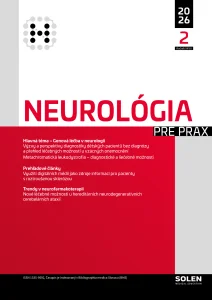

Neurológia pre prax 2/2026
Anti-CD20 liečba pri RRSM: dlhodobé dáta ofatumumabu u farmakonaivných pacientov
Sclerosis multiplex (SM) je chronické zápalové a neurodegeneratívne ochorenie CNS, pri ktorom v ostatných rokoch dochádza k zásadnému posunu v chápaní jeho imunopatologických mechanizmov. Tradičný pohľad zameraný na dominantnú úlohu T lymfocytov v patogenéze SM je dopĺňaný komplexnejšou perspektívou, ktorá zdôrazňuje význam B lymfocytov v iniciácii, ako aj udržiavaní zápalovej aktivity. Významnou súčasťou tejto patofyziológie je expresia CD20 antigénu na povrchu B buniek, ktorá sa stala cieľom biologickej liečby. Deplécia CD20 B lymfocytov vedie k výraznému zníženiu klinickej aj rádiologickej aktivity ochorenia a predstavuje jeden z kľúčových terapeutických prístupov. Do klinickej praxe boli postupne zavedené anti-CD20 monoklonálne protilátky, najmä rituximab, okrelizumab a ofatumumab, ktoré sa líšia farmakokinetickými vlastnosťami, spôsobom administrácie, ako aj imunogenitou. Ofatumumab je subkutánne aplikovaná anti-CD20 protilátka umožňujúca domáce podávanie, ktorej účinnosť a bezpečnosť boli hodnotené v randomizovaných klinických štúdiách ASCLEPIOS I a II a v ich otvorenej extenznej štúdii ALITHIOS. Značnú časť sledovanej populácie tvorili nedávno diagnostikovaní, farmakonaivní dospelí pacienti s relabujúcimi formami SM. Dlhodobé údaje so sledovaním až sedem rokov v tejto subpopulácii pacientov poukazujú na pretrvávajúcu nízku klinickú aj rádiologickú aktivitu ochorenia, významný podiel pacientov bez známok aktivity ochorenia (NEDA‑3) a stabilný bezpečnostný profil bez identifikácie nových bezpečnostných signálov. Pacienti liečení ofatumumabom v skorých fázach ochorenia vykazovali nižšiu mieru progresie ochorenia v porovnaní s pacientmi, u ktorých došlo k neskoršej eskalácii liečby. Tieto údaje podporujú koncept včasného začatia vysokoúčinnej liečby u vhodne zvolených pacientov, pričom interpretácia dlhodobých výsledkov by mala zohľadňovať otvorený dizajn extenznej fázy štúdie.
Kľúčové slová: ofatumumab, anti-CD20 liečba, skoré začatie vysokoúčinnej liečby, relabujúce formy sclerosis multiplex (RSM), dlhodobá účinnosť a bezpečnosť.
Anti-CD20 therapy in relapsing-remitting multiple sclerosis: long term ofatumumab data in treatment naive patients
Multiple sclerosis (MS) is a chronic inflammatory and neurodegenerative disease of the central nervous system. The recent years have brought a substantial shift in the understanding of immunopathological mechanisms. The traditional view focusing on the dominant role of T lymphocytes in MS pathogenesis has been complemented by a more comprehensive perspective emphasizing the importance of B lymphocytes in both the initiation and maintenance of inflammatory activity. A key element of this pathophysiology is the expression of the CD20 antigen on the surface of B cells, which has become a target for biological therapy. Depletion of CD20‑positive B lymphocytes leads to a marked reduction in both clinical and radiological disease activity and represents one of the key therapeutic approaches in MS. Anti‑CD20 monoclonal antibodies, including rituximab, ocrelizumab, and ofatumumab, have been introduced into clinical practice and differ with respect to pharmacokinetic characteristics, routes of administration, and immunogenicity. Ofatumumab is a subcutaneously administered anti‑CD20 monoclonal antibody that enables home‑based treatment. Its efficacy and safety have been evaluated in the randomized clinical trials ASCLEPIOS I and II and in their open‑label extension study ALITHIOS. A substantial proportion of the studied population consisted of recently diagnosed, treatment‑naive adult patients with relapsing forms of MS. Long‑term data with follow‑up of up to seven years in this patient subpopulation demonstrate sustained low clinical and radiological disease activity, a high proportion of patients achieving no evidence of disease activity (NEDA‑3), and a stable safety profile without the identification of new safety signals. Patients treated with ofatumumab in the early stages of the disease showed a lower rate of disease progression compared with patients who underwent later escalation from less effective therapy. These findings support the concept of early initiation of high‑efficacy therapy in appropriately selected patients, while interpretation of long‑term results should take into account the open‑label design of the extension phase of the study
Keywords: ofatumumab, anti‑CD20, early treatment, relapsing forms of MS (RMS), long‑term efficacy and safety