

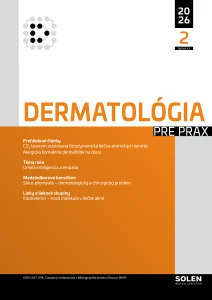
Dermatológia pre prax 3/2026
Najčastejšie nežiaduce účinky onkologickej liečby na kožu pacientov
Nežiaduce účinky onkologickej liečby na kožu sú spôsobené rôznymi mechanizmami a majú rôznu intenzitu, pričom zvyčajne nie sú imunologicky podmienené. Klinický obraz je preto pestrý, pričom pri jednotlivých skupinách liečiv, ako sú chemoterapeutiká, imunoterapeutiká, hormonálna liečba a biologická liečba, býva často pomerne typický bez ohľadu na typ základného nádoru. Kožné a adnexálne nežiaduce účinky pacienti často vnímajú ako výrazne zaťažujúce, pretože sa vyskytujú na viditeľných alebo citlivých miestach a bývajú spojené s intenzívne vnímaným svrbením. Sú často chronické, vyžadujúce dlhodobú starostlivosť a ošetrovanie. Nežiaduce účinky onkologickej liečby teda výrazným spôsobom znižujú kvalitu života pacientov. Dermatológ by mal vedieť správne diagnostikovať a kategorizovať nežiaduci účinok onkologickej liečby, ponúknuť pacientovi adekvátnu liečbu a napokon komunikovať s onkológom o možnosti pokračovania, zmeny dávky alebo prerušenia onkologickej liečby.
Kľúčové slová: onkologická liečba, nežiaduce účinky liečby, alopécia, akneiformný raš, pruritus kože
The most common adverse effects of oncological treatment on the skin of patients
Adverse effects of oncological treatment on the skin arise through various mechanisms and vary in intensity; they are usually not immunologically mediated. This is why the clinical picture is variable, although for specific groups of drugs, such as chemotherapeutics, immunotherapeutics, hormonal therapy and biologic therapy, it is often relatively typical regardless of the type of tumor being treated. Cutaneous and adnexal adverse effects are often perceived by patients as severe because they occur on visible or sensitive areas and are frequently associated with intense itching. These adverse effects are often chronic and require long-term care and treatment. Side effects of oncological treatment significantly reduce the quality of life of patients. The goal in dermatology is to correctly diagnose and classify adverse effects of oncological treatment, differentiate them from paraneoplastic skin manifestations, offer adequate treatment to the patient, and communicate with the oncologist about possible continuation, dose modification or interruption of oncological therapy.
Keywords: oncological treatment, adverse effects of treatment, alopecia, acneiform rash, drug-induced pruritus

