

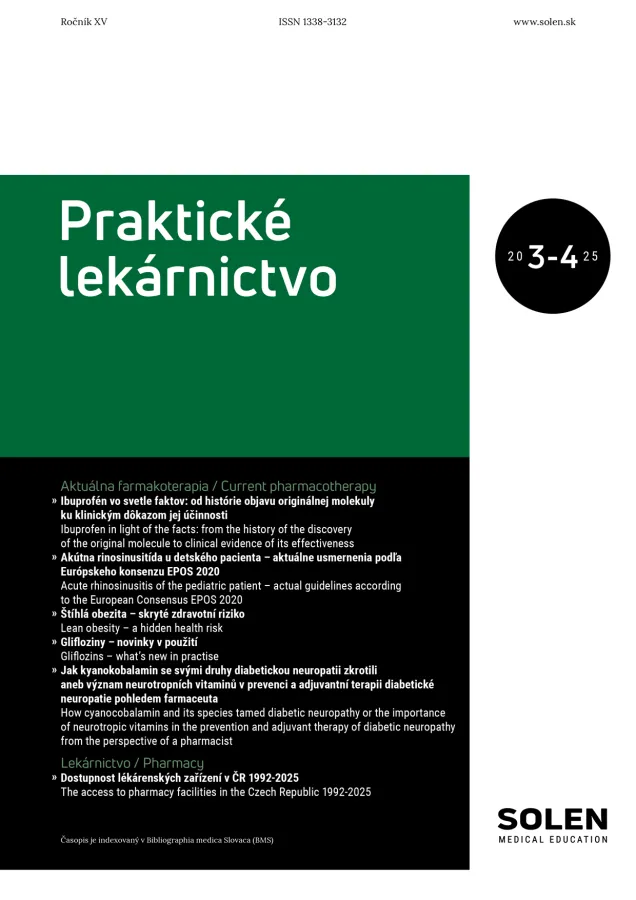
Praktické lekárnictvo 3-4/2025
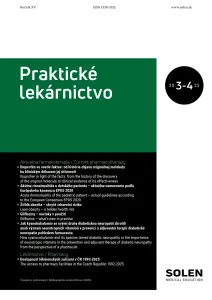
Ibuprofén vo svetle faktov: od histórie objavu originálnej molekuly ku klinickým dôkazom jej účinnosti
doc. PharmDr. Andrea Gažová, PhD.
Ibuprofén, ktorý bol pripravený ako bezpečnejšia alternatíva liečby reumatoidnej artritídy ku kyseline acetylsalicylovej a kortikosteroidom s cieľom znížiť nežiaduce účinky, vďačí za svoj objav Dr. Stewartovi Adamsovi. Mechanizmus jeho účinku spočíva v neselektívnej inhibícii cyklooxygenázy (COX), čo vedie k potlačeniu produkcie prostaglandínov zodpovedných za zápal a bolesť. Dáta o klinickej účinnosti hodnotené parametrom NNT (Number Needed to Treat) poukazujú na vysokú efektivitu aj v kombinácii s paracetamolom. Porovnávacie štúdie dokumentujú jeho využitie pri akútnej bolesti, napríklad po extrakcii zuba, kde sa často javí ako nadradený paracetamolu. Liečivo sa štandardne využíva aj v indikáciách, ako je migréna, tenzná bolesť hlavy a primárna dysmenorea. Lieková forma a rýchlosť disolúcie majú významný vplyv na nástup analgetického účinku. Bezpečnostný profil lieku je charakterizovaný lepšou gastrointestinálnou toleranciou v porovnaní s kyselinou acetylsalicylovou. Postavenie ibuprofénu v modernej farmakoterapii na základe princípov medicíny založenej na dôkazoch je klinicky relevantné a vysoko etablované.
Kľúčové slová: ibuprofén, nesteroidné antiflogistiká (NSAID), reumatoidná artritída, NNT, Stewart Adams, akútna bolesť
Ibuprofen in light of the facts: from the history of the discovery of the original molecule to clinical evidence of its effectiveness
Ibuprofen, which was developed as a safer alternative to acetylsalicylic acid and corticosteroids for the treatment of rheumatoid arthritis with the aim of reducing adverse effects, owes its discovery to Dr. Stewart Adams. Its mechanism of action lies in the non-selective inhibition of cyclooxygenase (COX), leading to the suppression of the production of prostaglandins responsible for inflammation and pain. Clinical efficacy data evaluated by the NNT (Number Needed to Treat) parameter indicate high effectiveness, also in combination with paracetamol. Comparative studies document its use in acute pain, for example after dental extraction, where it often appears superior to paracetamol. The drug is also standardly used in indications such as migraine, tension-type headache, and primary dysmenorrhea. The pharmaceutical form and dissolution rate have a significant impact on the onset of the analgesic effect. The safety profile of the drug is characterized by better gastrointestinal tolerance compared to acetylsalicylic acid. The position of ibuprofen in modern pharmacotherapy, based on the principles of evidence-based medicine, is clinically relevant and highly established.
Keywords: ibuprofen, non-steroidal anti-inflammatory drugs (NSAIDs), rheumatoid arthritis, NNT, Stewart Adams, acute pain