

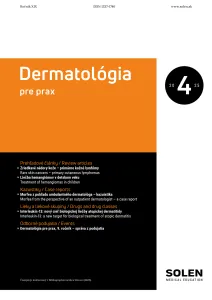
Dermatológia pre prax 4/2025
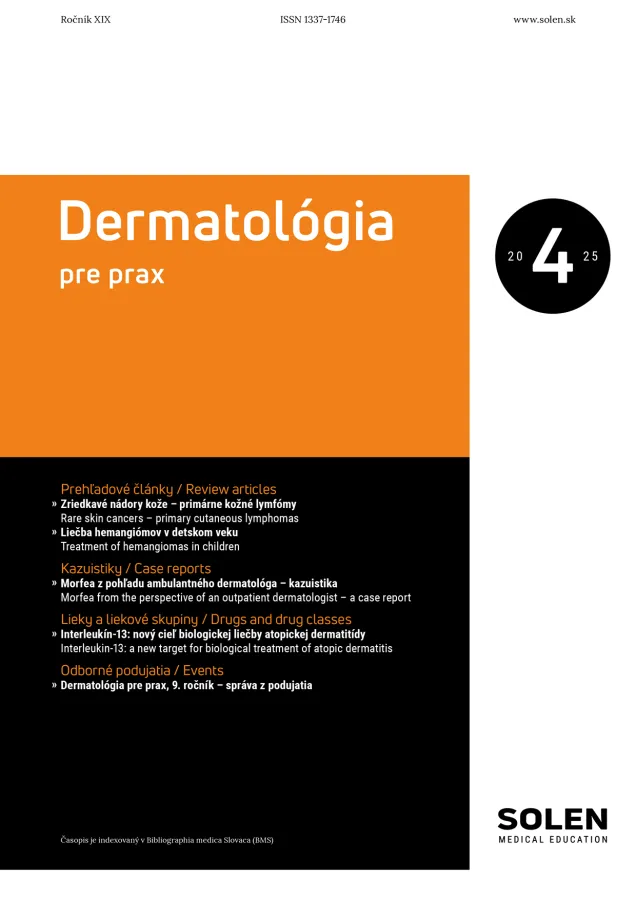
Interleukín-13: nový cieľ biologickej liečby atopickej dermatitídy
doc. MUDr. Dušan Buchvald, PhD.
V patogenéze atopickej dermatitídy (AD) zohrávajú rozhodujúcu úlohu dva základné faktory: dysregulácia imunitnej odpovede a porucha epidermálnej bariérovej funkcie. V ložiskách atopickej dermatitídy prítomné viaceré typy buniek imunitného systému vrátane Th2 lymfocytov, vrodených lymfoidných buniek typu 2 (ILC2), mastocytov a bazofilných leukocytov sekretujú rôzne cytokíny imunitnej odpovede typu 2 – interleukín (IL)-4, IL-5, IL-13, IL-31. Z nich je za hlavný mediátor v patogenéze choroby považovaný IL-13. Hľadanie nových, selektívnych terapeutických postupov stredne ťažkej až ťažkej atopickej dermatitídy má veľký význam vzhľadom na závažné negatívne ovplyvnenie kvality života pacientov s touto chorobou. Tralokinumab a lebrikizumab sú nové selektívne inhibítory IL-13, ktoré preukázali svoju účinnosť a bezpečnosť v liečbe AD.
Kľúčové slová: atopická dermatitída, interleukín-13, tralokinumab, lebrikizumab
Interleukin-13: a new target for biological treatment of atopic dermatitis
The pathogenesis of atopic dermatitis (AD) is crucially influenced by two main factors: dysregulation of the immune response and epidermal barrier dysfunction. In the lesional skin of atopic dermatitis various immune cells, including Th2 cells, type 2 innate lymphoid cells (ILC2s), mast cells and basophils, produce several type 2 cytokines [interleukin (IL)-4, IL-5, IL-13, IL-31]. Out of these, IL-13 is considered to be the major player in the pathogenesis of the disease. Searching for new and more selective treatments for moderateto-severe cases is important because of the considerable effect of AD on the quality of life. Tralokinumab and lebrikizumab are new selective IL-13 inhibitors that have demonstrated safety and efficacy as treatment options for AD.
Keywords: atopic dermatitis, interleukin-13, tralokinumab, lebrikizumab