




Via practica 1/2026
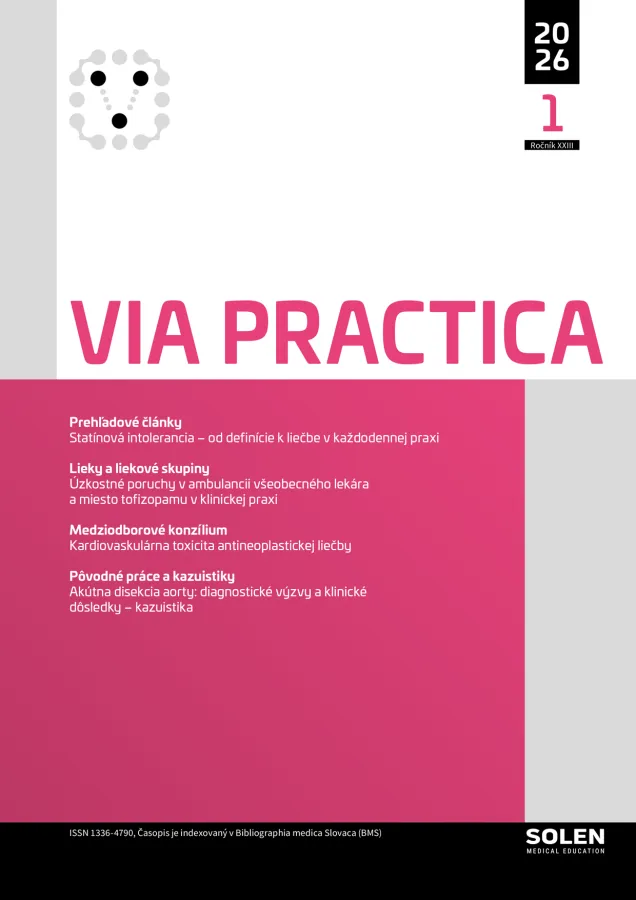
Anxiety disorders in general practice and the role of tofisopam in clinical practice
Anxiety disorders are common in primary care and may present mainly with somatic symptoms (palpitations, dyspnoea, gastrointestinal complaints, muscle tension), delaying recognition. This narrative review provides general practitioners with a practical framework for diagnosing and managing anxiety disorders and critically discusses the role of tofisopam. It synthesises international guideline recommendations, available clinical data on tofisopam, and recent Slovak outpatient psychiatry data reported by the National Health Information Centre (NCZI). Evidence-based long-term management relies on psychoeducation, psychotherapy (especially CBT), and first-line pharmacotherapy with SSRIs/SNRIs. Benzodiazepines can be helpful short term, but prolonged use is associated with tolerance and dependence, cognitive and psychomotor impairment, and hazardous interactions with other CNS depressants. Tofisopam is an atypical 2,3-benzodiazepine that may be considered when sedation is undesirable and preservation of daytime functioning is a priority. In practice, clinicians should maintain a guideline-consistent long-term treatment “backbone”, use symptomatic agents in a time-limited manner, and consider tofisopam in selected patients with close monitoring and strict adherence to the SmPC.
Keywords: anxiety disorders, primary care, benzodiazepines, tofisopam, sedation, dependence, cognitive risks