











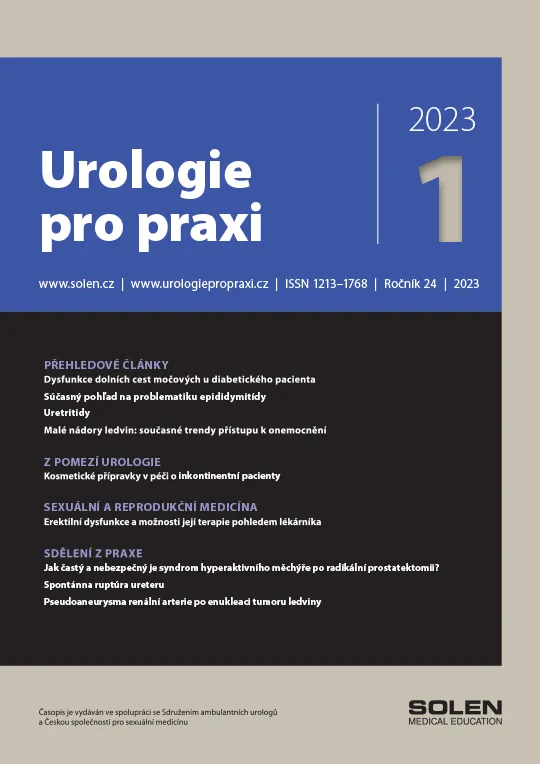
Urologie pro praxi 3/2026
What a urologist should know about endometriosis
Endometriosis is a common gynaecological disease characterized by the presence and growth of tissue similar to the uterine lining (endometrium) outside the uterine cavity. Ectopic endometrial tissue induces a chronic inflammatory response at and around the site of its origin. The prevalence ranges from 10% to 15% in women of childbearing age, and typical clinical manifestations are chronic pelvic pain (in up to 90%) and sterility (in 50% of the cases). The disease is usually classified into three main types based on the location and depth of infiltration: superficial, ovarian, and deep endometriosis (DE) which also includes urinary tract endometriosis (UTE). UTE involves the presence of endometrium-like tissue in the bladder, ureters, kidneys, and urethra. This type of endometriosis occurs in 1.0–5.5% of all women with endometriosis. The prevalence is higher among women with deep endometriosis, where it ranges from 16.4% to 52.6%. In the urinary tract, the most commonly affected organ is the bladder (70–85%), followed by the ureters (9–23%), the kidneys (4%), and the urethra (2%). The prevalence of ureteral endometriosis is estimated at 10–14% in women with DE. It most often involves the distal segment of the ureter, approximately 3 to 4 cm above the vesico- ureteral junction. Although it can be bilateral, it is more commonly unilateral and more frequently involves the left ureter. From a diagnostic standpoint, a challenging fact is that as many as 50% of patients with ureteral endometriosis have no symptoms. From a urological perspective, the most common error is the management of bladder DE with a transurethral resection and, in cases involving the ureter, treating only the stricture itself without completely removing deep endometriosis lesions.
Keywords: deep endometriosis (DE), stenosis, ureter, bladder.

