








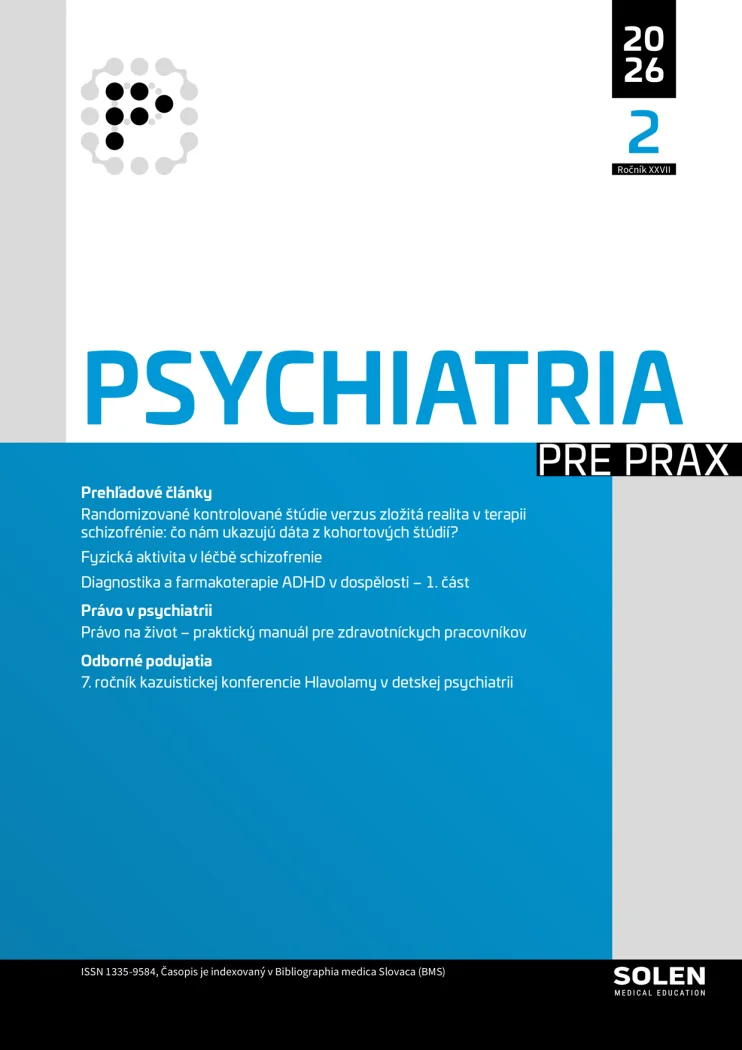
Psychiatria pre prax 2/2026
Randomized controlled trials versus the complex reality of schizophrenia treatment: What do the data from cohort studies tell us?
This review article provides a synthesis of findings from large-scale cohort studies in the treatment of schizophrenia and highlights their significance when contrasted with the methodological limitations of classic randomized controlled trials (RCTs). The introductory section elucidates the limitations of RCTs, particularly their low external validity and the resulting gap between efficacy and effectiveness in therapy of schizophrenia. The paper emphasizes the contribution of large cohort studies involving heterogeneous patient populations commonly encountered in outpatient and inpatient clinical settings. Subsequent sections address the impact of antipsychotic treatment on physical health, with a focus on cardiovascular safety and mortality. The article also draws attention to the critical issue of managing patients with dual diagnosis. A portion of the work evaluates the preventive potential of selected antipsychotics (specifically clozapine and long-acting injectables – LAIs) in reducing the risk of suicidal behavior and summarizes the safety and real-world clinical benefit of adjunctive pharmacotherapy (antidepressants, benzodiazepines) in the treatment of schizophrenia. The aim of this review is to provide psychiatrists in both outpatient and inpatient care with a comprehensive perspective on robust real-world evidence, which serves as an essential complement to clinical trial results in the personalization and optimization of therapeutic strategies.
Keywords: schizophrenia, antipsychotics, effectiveness, mortality, comorbidity