





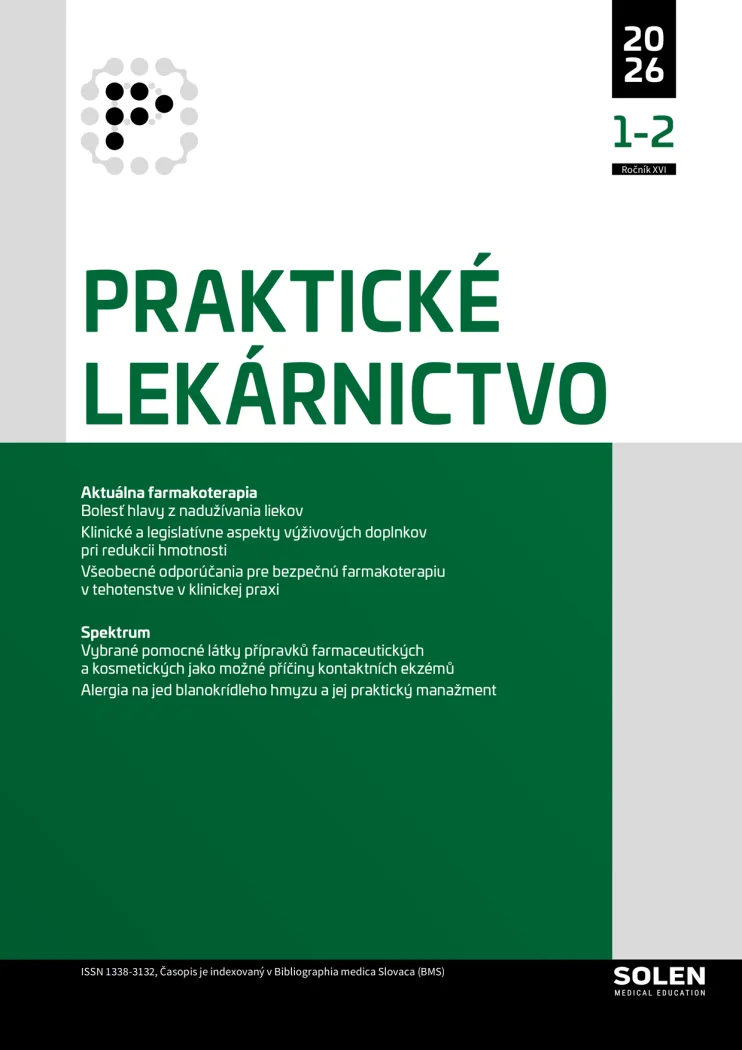
Praktické lekárnictvo 1-2/2026
Medication-Overuse Headache
Medication overuse headache (MOH) develops through transformation from a primary headache disorder – most commonly migraine or tension-type headache – when acute analgesic treatment is overused (simple analgesics, combination analgesics, triptans, opioids). The prevalence of MOH in the general population is estimated at approximately 1-2%. MOH is defined as headache occurring on >15 days per month for >3 months in the context of overuse of NSAIDs, paracetamol (acetaminophen), or other simple analgesics (≥15 days per month), or triptans, opioids, or combination analgesics (≥10 days per month). The clinical presentation of MOH is determined by the underlying primary headache disorder. In migraine, with increasing headache frequency, some patients may also show a change in migraine characteristics, with pain becoming more diffuse and continuous, and migraine-associated symptoms (nausea, vomiting, photophobia, and phonophobia) decreasing in intensity. Treatment of MOH is based on patient education about the nature of the headache, withdrawal of the overused acute medication, and initiation of appropriate preventive therapy.
Keywords: headache, migraine, medication overuse, triptans, preventive therapy