

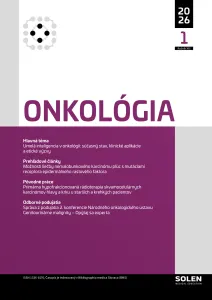
Onkológia 1/2026
Artificial intelligence in oncology – from clinical practice to writing scientific articles
The rapid development of artificial intelligence (AI) is reshaping modern medicine, including oncology. In clinical oncology, machine learning, deep learning, and large language models can support diagnosis, risk stratification, treatment planning, and workflow optimization. This review summarizes practical applications of AI in oncology, with special emphasis on ChatGPT-like models in clinical decision support, personalized treatment, and scientific writing. The manuscript is based on recent literature and official recommendations regarding responsible AI use in medical publishing. AI has already shown value in mammography screening and digital pathology, where it can improve diagnostic performance or reduce workload while maintaining safety. ChatGPT-4-type systems appear promising as supportive tools in complex oncology decision-making, but their outputs still require expert validation. In scientific writing, AI may assist with outlining, literature synthesis, language editing, and manuscript polishing; however, risks include hallucinations, inaccurate citations, and unethical authorship practices. AI can enhance efficiency in both oncology practice and academic work, but its use must remain transparent, critically supervised, and fully accountable to the human clinician or author.
Keywords: artificial intelligence, ChatGPT, oncology, diagnosis, personalized medicine, scientific writing, AI ethics