


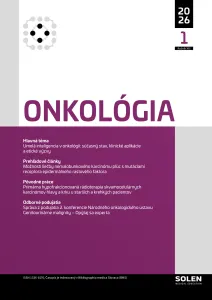

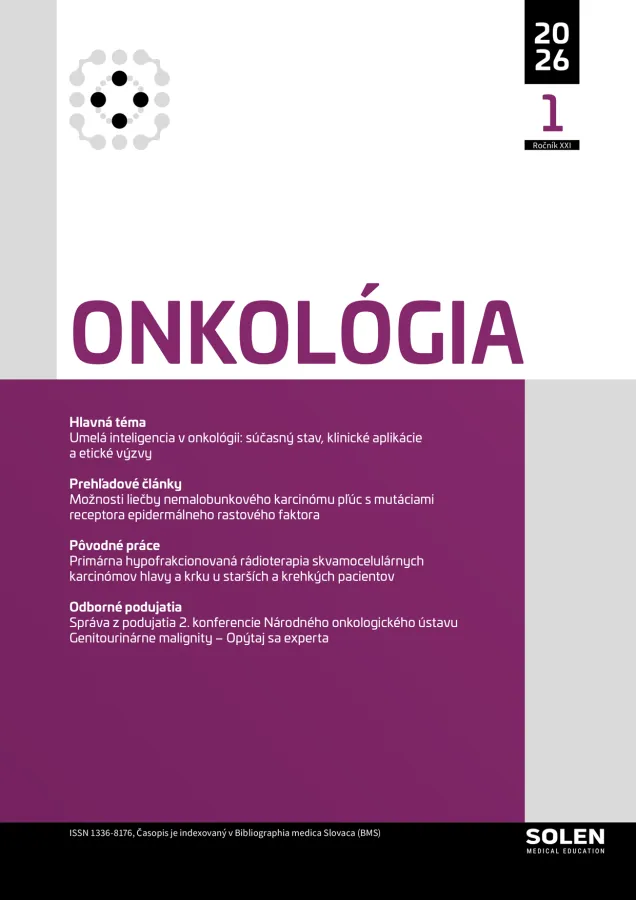
Onkológia 1/2026
Treatment options in EGFR-mutated non-small cell lung cancer
The epidermal growth factor receptor has become a key target in oncology. Targeted therapy with tyrosine kinase inhibitors (TKIs) has radically changed the prognosis of patients with EGFR-mutated non-small cell lung cancer. Currently, three generations of EGFR TKIs are available, with third-generation osimertinib becoming the standard first-line treatment with a median progression-free survival (PFS) of 18.9 months. Recent studies FLAURA2 and MARIPOSA comparing combination strategies (TKI with chemotherapy or TKI with the bispecific monoclonal antibody amivantamab) have demonstrated superiority over osimertinib monotherapy at the cost of higher toxicity. Following progression on first-line TKI, it is crucial to identify resistance mechanisms. The most common include T790M mutation or MET amplification. Third-generation TKIs have also been established in the treatment of early-stage disease. This review summarizes current treatment options for EGFR-mutated NSCLC including epidemiology, biological foundations, results of key clinical trials, treatment sequencing, resistance mechanisms, and novel therapeutic strategies.
Keywords: EGFR, non-small cell lung cancer, tyrosine kinase inhibitors, osimertinib, amivantamab, lazertinib, T790M, resistance