


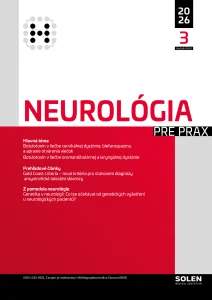





Neurológia pre prax 3/2026
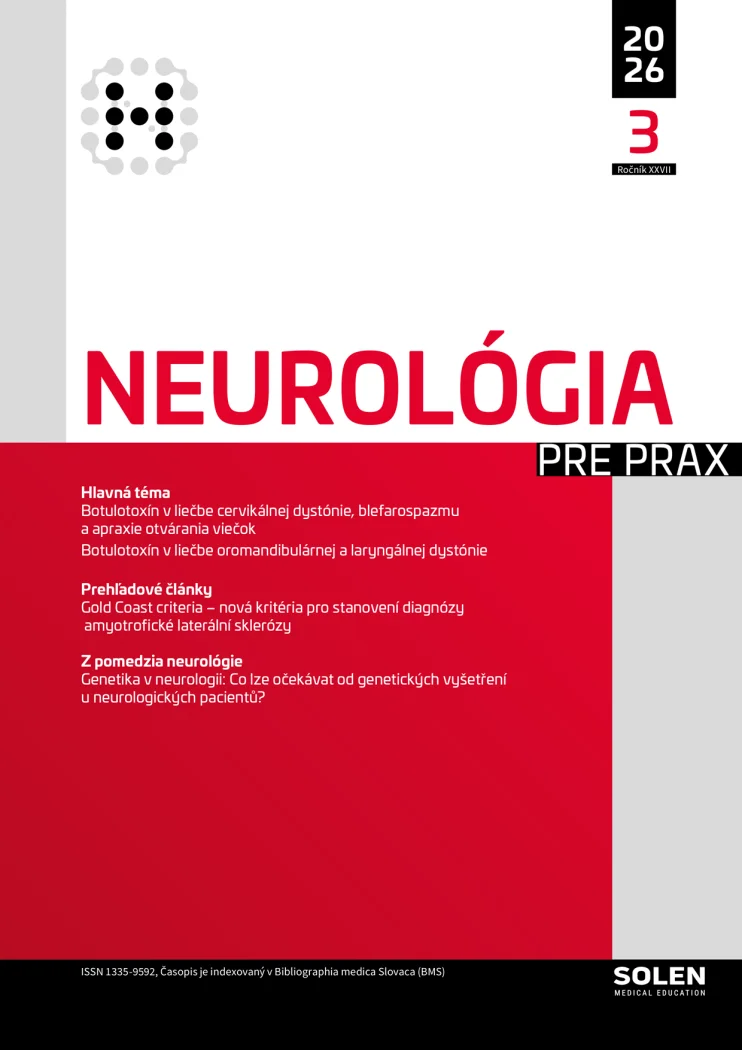
Botulinum toxin in the treatment of cervical dystonia, blepharospasm and eyelid opening apraxia
Focal dystonias are a heterogeneous group of movement disorders for which botulinum toxin type A is the first-line treatment. Despite its proven efficacy, up to one-third of patients report suboptimal outcomes, often due to incorrect muscle targeting, inadequate dosing, or technical limitations. Guidance techniques such as EMG and ultrasound significantly enhance therapeutic efficacy. Botulinum toxin type A is essential in managing cervical dystonia, blepharospasm and apraxia of eyelid opening. Optimal care requires an individualized approach, including dose and interval adjustments, as well as targeted management of non-motor symptoms that influence patient’s satisfaction.
Keywords: botulinum toxin, cervical dystonia, blepharospasm, eyelid opening apraxia