




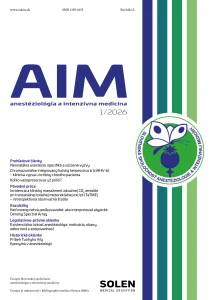

Anestéziológia a intenzívna medicína 1-2/2025
Overview of peripheral nerve blocks in total knee arthroplasty
Total knee arthroplasty (TKA) is one of the most common orthopedic procedures (1). Given the intense nature of pain following TKA, peripheral nerve blocks (PNBs) play a key role in multimodal analgesia. Nowadays, the goal of PNBs is not only to minimize postoperative pain or opioid consumption, but also to reduce the time to discharge and maintain sufficient motor function of the lower limb for the needs of early mobilization and rehabilitation with minimizing falls. In TKAs, individual PNBs have been modified according to the latest knowledge in order to ensure the best possible targeted pain treatment. In the last decade, we have experienced a search for and subsequent transition to purely sensory motor- -sparing blockades (2). There is still no clear answer to the question of which combination of PNBs will provide the most effective analgesia while preserving motor function. The aim of this review is to evaluate the current evidence and provide the reader with a comprehensive overview of PNB in knee TEP, focusing on their anatomical dispositions, analgesic efficacy, impact on mobility, and safety profile.
Keywords: peripheral nerve block, total knee arthroplasty, motor-sparing blocks, targeted analgesia