



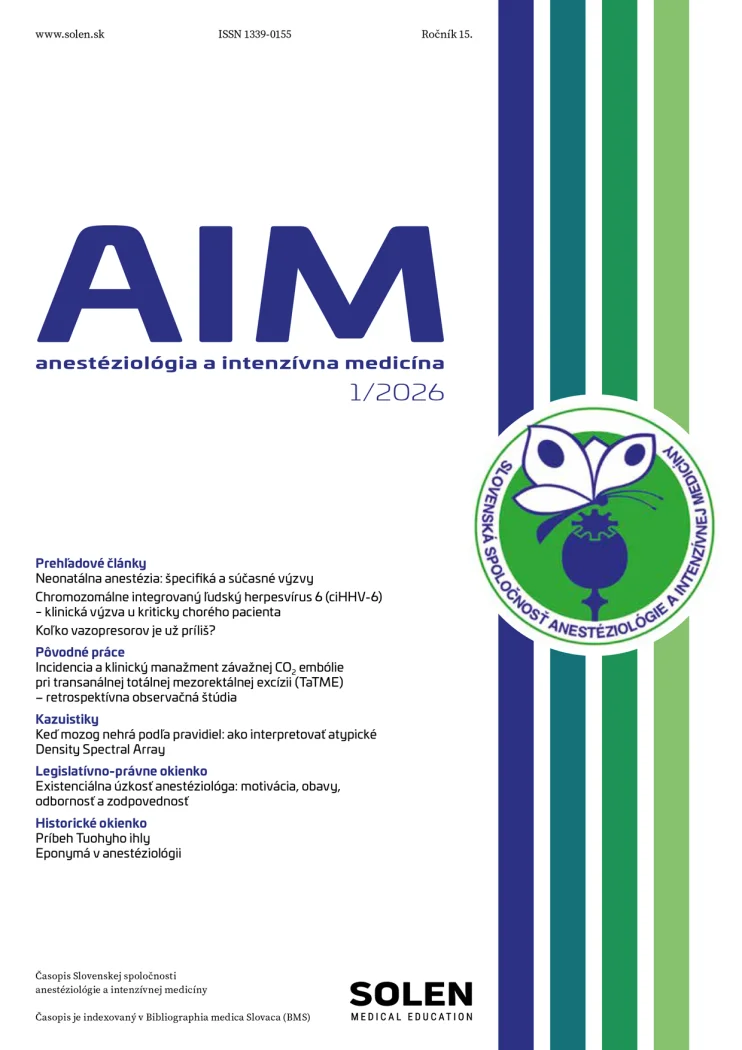
Anestéziológia a intenzívna medicína 1/2026
Existential anxiety among anesthesiologists: Motivation, concerns, expertise, and responsibility
This article addresses the existential anxiety of anaesthesiologists as a specific manifestation of psychological burden arising from decision-making autonomy, immediate responsibility for the patient’s life, and the limits of medical control. It is based on the premise that the work of an anaesthesiologist is not only technically demanding but also represents a deeply ethical, legal, and professionally complex role. The text analyses the main sources of this anxiety, particularly decision- -making under time pressure and uncertainty, the requirement to proceed lege artis, moral distress, concerns about errors and legal consequences, as well as dilemmas associated with end-of-life decision-making. Special attention is given to the relationship between professional expertise, motivation, respect to patient´s will, and the safety culture of the workplace. Key tools for the prevention and management of this burden include team support, effective communication, access to psychosocial support, and a fairly structured system of responsibility, all of which may contribute to preventing burnout and secondary traumatization among healthcare professionals. However, the existential anxiety of anaesthesiologists can be interpreted not only as a risk factor but also as an expression of a deep awareness of the meaning of the profession, the fragility of life, and the weight of professional decisions.
Keywords: existential anxiety, psychological burden, professional responsibility, lege artis, burnout, healthcare ethics