







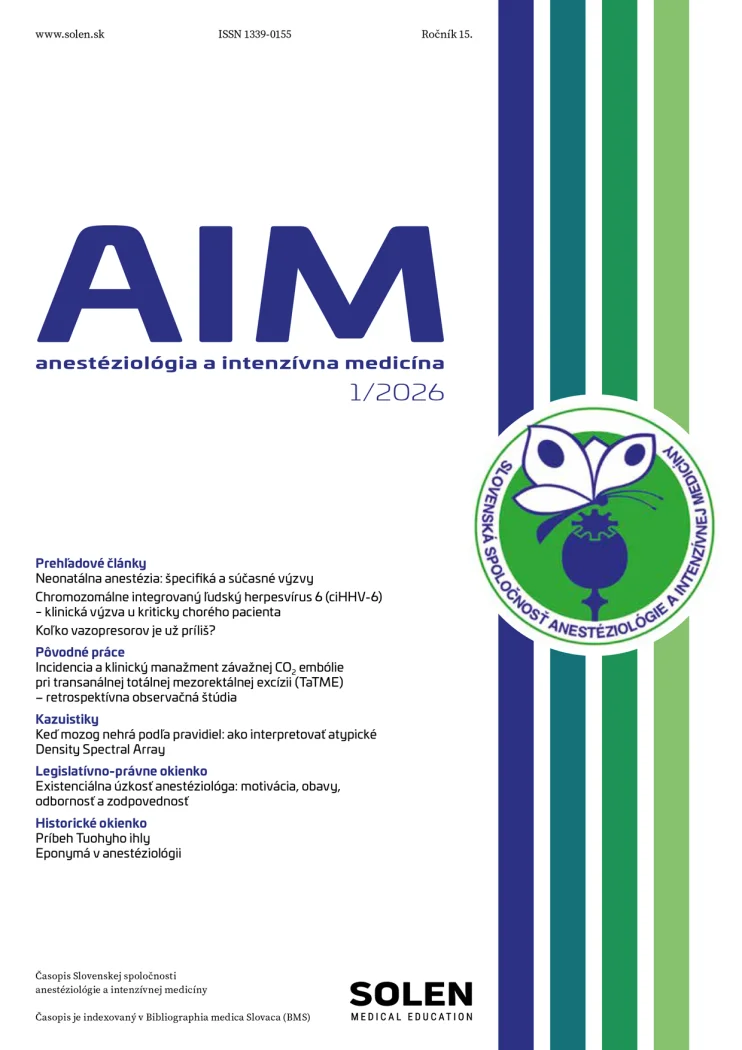
Anestéziológia a intenzívna medicína 1/2026
MUDr. Peter Škrak, PhD.
Human Herpesvirus 6 (HHV-6) comprises two viruses, HHV-6A and HHV-6B. HHV-6B infects nearly 100% of individuals before the age of three; the disease is known as exanthema subitum and is characterized by high fever, diarrhea, and a mild skin rash. Primary HHV-6A infection is usually asymptomatic. Like other herpesviruses, HHV-6 establishes latency and reactivation which may cause disease in severely immunocompromised individuals. Unlike other herpesviruses, HHV-6 species can integrate the HHV-6 genome into the chromosomal telomeres. HHV-6 integration into the chromosomes of germ cells is also possible and leads to offspring that carry a copy of the viral genome in every nucleated cell of the body. HHV-6 levels in whole blood that exceed 105 to 106 copies/ml are suggestive of ciHHV-6. Several clinical scenarios may be associated with ciHHV-6. High HHV-6 DNA loads can lead to erroneous diagnosis of active infection. Transplant recipients with ciHHV-6 may be at increased risk for bacterial infection and graft rejection. It is not known whether ciHHV-6 individuals are put at clinical risk by the use of drugs that have been associated with HHV-6 reactivation in vivo or in vitro. Nonetheless, a careful observation is recommended when use of such drugs is indicated in individuals with ciHHV-6. Little is known about whether antivirotic therapy would be beneficial in individuals with ciHHV-6. The treatment should be considered in immunocompromised patients with HHV-6 when clinical manifestation is typically associated with HHV-6 and other etiologic factors have been excluded. Clinical consideration is also appropriate in case of heart failure, myocarditis and angina pectoris in individuals with ciHHV-6.
Keywords: human herpesvirus, chromosomal integration, DNA load monitoring, antivirotics