

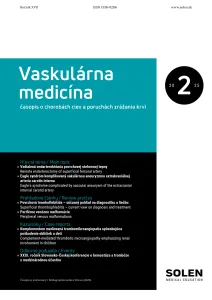
Vaskulárna medicína 2-3/2018
Critical limb ischemia – new possibilities in endovascular treatment
Successful percutaneous endovascular therapy is the key to improve the quality of life, decrease the amputation rates and improve the survival in patients with intermittent claudication and critical limb ischemia (CLI). In this article we would like to cover the major advancements in the field of endovascular therapy (EVT) achieved during the past years. Improved procedural outcomes have resulted in an increase in the number of EVT, particularly doubled for patients with intermittent claudication and fourfold in patient with critical limb ischemia (1). The aim of this article was to emphasize the special gain of percutaneous atherectomy in CLI treatment. Philosophy of percutaneous aterectomy is based on luminal gain by reduction/modification of the atherosclerous plaque , changing vessel compliance to reduce dissections, vessel barotrauma and bail out stenting. The „leave nothing behind“ strategy has gained in popularity, with the aim of leave the treated vessel without stents and intact for potential future treatments and avoid potential stent-related problems (2).
Keywords: critical limb ischemia, percutaneous endovascular therapy, percutaneous atherectomy