


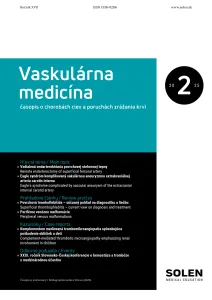

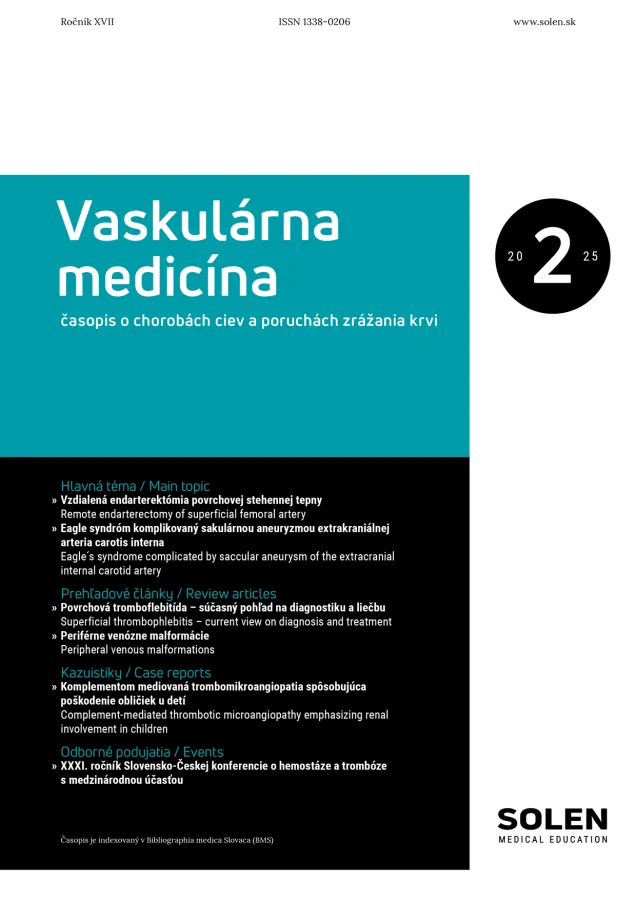
Vaskulárna medicína 2/2025
Eagle´s syndrome complicated by saccular aneurysm of the extracranial internal carotid artery
Purpose: Eagle´s syndrome (ES) is a rare compression syndrome in which an abnormally elongated styloid process or calcified stylohyoid ligament compresses nearby neurovascular structures of the neck. The American otolaryngologist Watt Weems Eagle first described the syndrome in 1937, characterized by an elongated styloid process and pain in the cervicofacial region. The syndrome was originally described in patients after tonsillectomy or neck trauma. Two types of the syndrome are currently known, classical and vascular. The classical form is caused by compression of the glossopharyngeal nerve, which causes odynophagia and facial and neck pain. In the vascular form, the osteoligamentous malformation compresses the extracranial carotid artery or jugular vein. Recent literature suggests that the vascular form could be an underestimated cause of several carotid complications.
Case report: Our case report describes a patient with saccular aneurysm of the extracranial internal carotid artery (ICA), with compression of the artery by an elongated styloid process. Successful treatment consisted of cervical styloidectomy and surgical resection of the aneurysm with direct (EtE) anastomosis of the ICA.
Conclusion: Eagle syndrome is rare, but it should be considered in the event of recurrent atypical pain and atypical carotid complications. It may be recognized late or misinterpreted. Extracranial internal carotid artery aneurysm caused by an elongated styloid process is extremely rare, in our case successfully treated by styloidectomy and surgical resection with EtE anastomosis ACI.
Keywords: Eagle’s syndrome, elongated styloid process, aneurysm internal carotid artery, cerebrovasular disease, stylocarotid syndrome, vascular Eagle´s syndrome