


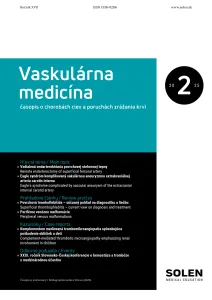

Vaskulárna medicína 2/2019
Long-term results of revascularization treatment of critical limb ischemia
Goal: The main purpose of this study is to evaluate the results of critical limb ischemia (CLI) treatment at our workplace between 2011 and 2015, and to determine the place of open surgical revascularization in the management of CLI treatment. Moreover, the study statistically elaborates the file focusing on the representation of individual therapeutic modalities and their combinations and on the frequency of arterial reconstructions in individual segments of the arterial bed. In the group of surgical revascularizations we evaluated the results of the treatment in terms of time of the arterial reconstruction, respectively in terms of the limb salvage and compared our results with the results reported in the literature. Another aim of this study is to identify all factors influencing the results of CLI revascularization treatment and to determine the extent of their influence on the long-term patency of arterial reconstructions. Last but not least ambition of this study is to evaluate underestimated time factor and to demonstrate the effect of delayed revascularization of the critical ischemic limb on the results of CLI treatment. Introduction: Critical limb ischemia has been considered to be one of the most serious medical, social and economic problem not only because of threat of the limb loss, but also because of the high long-term cardiovascular mortality. Therefore, CLI is currently very popular in the field of vascular medicine, as the subject of the research as well as a clinic problem. The basic conditions for the successful treatment of CLI are: complexity of the treatment based on the multidisciplinary consensus of all interested vascular specialists and its timeliness. Material and Methods: There were 109 surgically treated patients with CLI between 2011 and 2015 in our file. By retrospective analysis of CLI duration history data, patients were divided into two groups according to the timeliness of surgical revascularization treatment. Based on the results of the treatment in both groups, we tried to determine the impact of the time on the success of the revascularization in terms of the patency of the reconstruction and the salvage of the limb. Conclusion: The success of surgical revascularization of the critically ischemic limb is determined by various factors such as morphology and distribution of atherosclerotic disability, localization and type of reconstructive performance, choice of vascular conduit, but also age, comorbidity, patient compliance, etc. However, good timing of revascularization treatment without unnecessary time loss is also very important.
Keywords: surgical treatment, peripheral arterial disease, critical limb ischemia, indications for surgical interventions