



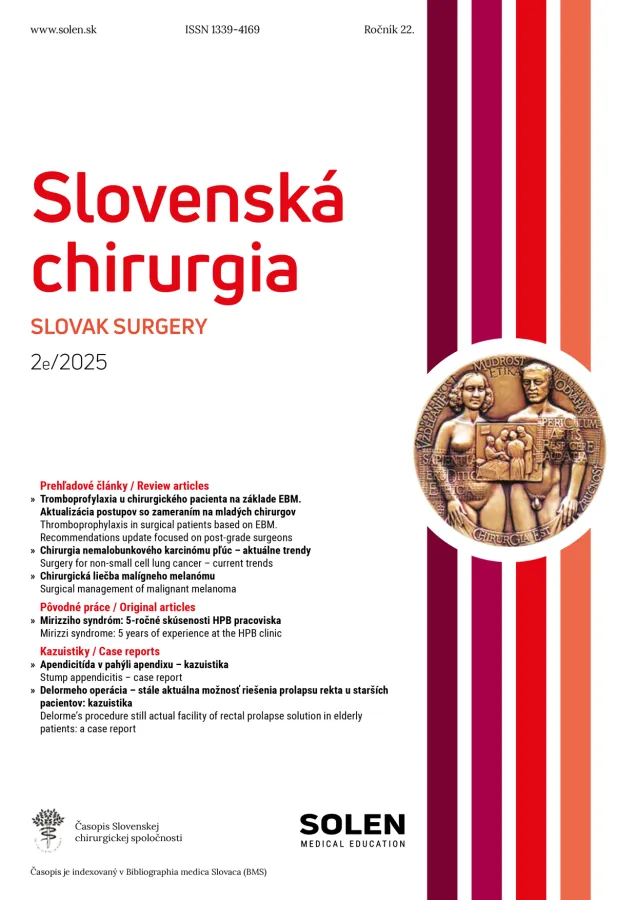
Slovenská chirurgia 2-3/2017
Mesenchymal stromal cells in context of treatment of liver diseases
End-stage liver disease is responsible for an increasing number of deaths every year. According to the WHO, the three most prevalent etiologies of chronic liver disease are alcohol consumption and infection by hepatitis B and C viruses. The increasing prevalence of end-stage liver disease without a parallel increase in donor organs has precipitated a search for alternative therapeutic strategies. Cell based therapy using mesenchymal stromal cells may represent an attractive option due to their availability and the relatively simple requirements for in vitro expansion and genetic manipulation. Depending on the underlying liver disease their mode of action is either to replace the diseased liver tissue or to support liver regeneration through their anti-inflammatory and anti-apoptotic as well as their pro-proliferative and pro-regenerative action. The elucidation of the regenerative mechanism of mesenchymal stromal cells in different liver diseases will promote their disease-specific therapeutic use. There is an increasing range of potential application of stem cells in liver diseases, with many clinical studies already undertaken, but research is still at the beginning of this era.
Keywords: stem cells, mesenchymal stromal cells, liver diseases, fibrosis, cirrhosis, regeneration, clinical trials