

Psychiatria pre prax 1/2026
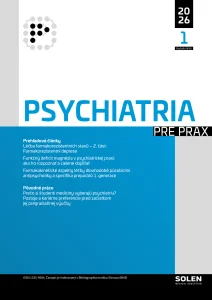
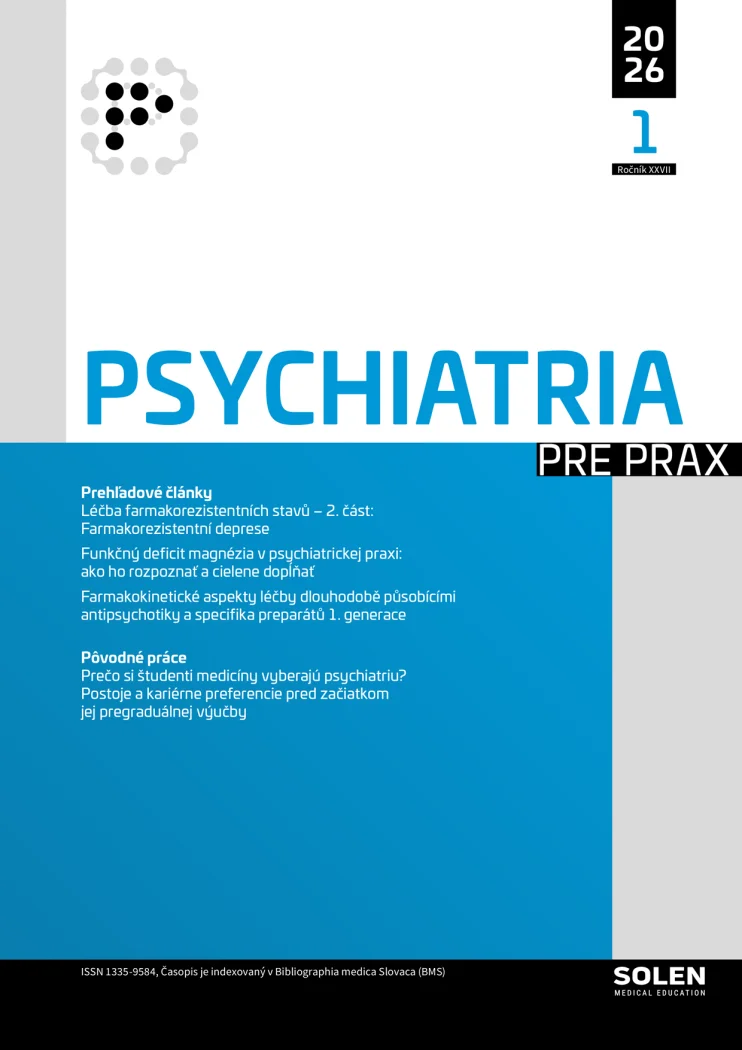
Treatment of pharmacoresistant states in psychiatry. Part 2: Treatment-resistant depression
Článek se soustředí na farmakorezistentní depresi a uvádí možnosti léčby, tj. záměnu stávajícího antidepresiva za jiné, augmentaci a kombinaci antidepresiv. Detailněji je popsána augmentace první (ketamin, esketamin) a druhou generací (esmetadon) nekompetivních antagonistů NMDA receptorů s rychlým nástupem antidepresivního efektu. Dále jsou zmíněny některé látky, které byly užívány před nástupem psychofarmakologické éry (opioidy, psilocybin) a alternativní přístupy (nutraceutika, probiotika), které mají určitý potenciál závažné depresivní příznaky zmírnit.
Keywords: switch to another antidepressant, augmentation and combination of antidepressants. In more details the augmentation with the first (ketamine, esketamine) and the second generation (esmethadone) of uncompetitive NMDA receptors antagonists, so called rapid acting antidepressants is described. Further, there are mentioned some substances used before psychopharmacological era (opioids, psilocybin) and alternative approaches (nutraceuticals, probiotics), which have certain potential to reduce severe depressive symptoms.