



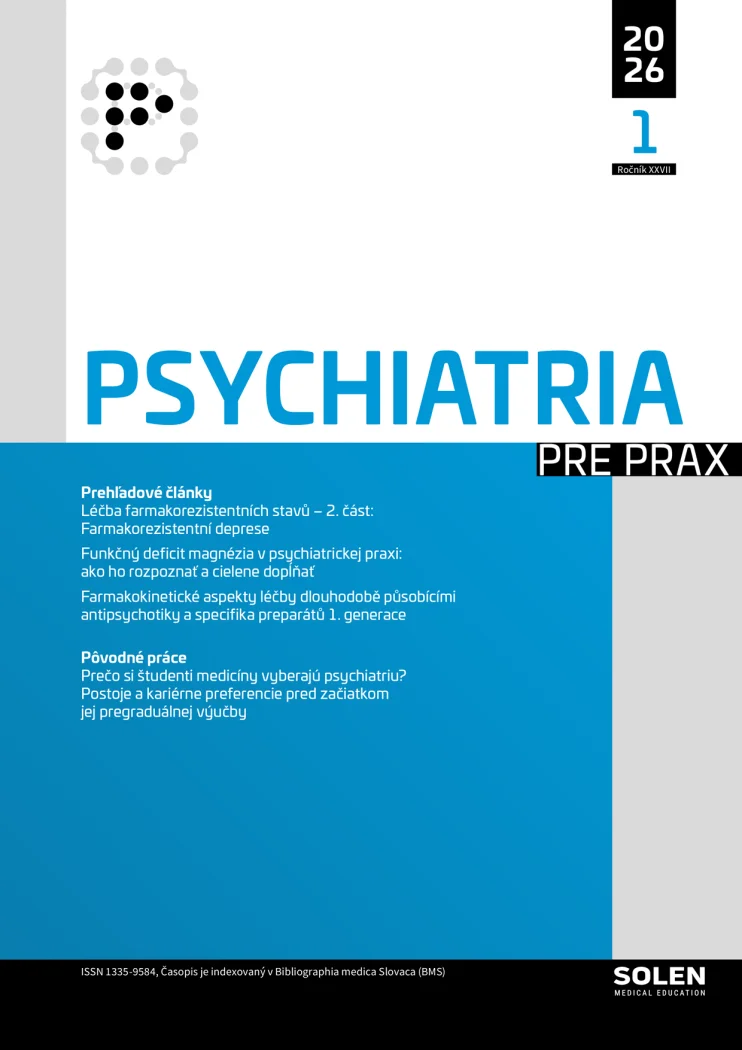
Psychiatria pre prax 1/2026
Functional magnesium deficiency and how to recognise and supplement it in psychiatric practice
Magnesium (Mg) is a key intracellular cation involved in neuromuscular excitability, energy metabolism and stress response. In outpatient psychiatry, clinicians frequently encounter patients with anxiety, sleep complaints, somatic symptoms and autonomic instability, in whom a symptom pattern compatible with Mg deficiency may be present even when serum Mg is normal (or low-normal). This clinical concept can be described as functional magnesium deficiency, where the overall clinical profile, risk factors and symptom dynamics are more informative than a single laboratory value. The aim of this paper is to provide a pragmatic framework for recognising functional Mg deficiency in routine psychiatric practice. We outline a targeted screening approach (risk factors, typical symptoms, comorbidities and concomitant treatment), propose a concise documentation template, and offer a simple algorithm for Mg supplementation and follow-up of clinical response over time. Particular attention is paid to the selection of oral medicinal forms of Mg with a clearly defined elemental Mg content and predictable tolerability, supporting safe use in outpatient settings. The review is complemented by 4 clinical case vignettes illustrating common scenarios in which Mg supplementation may serve as a rational adjunct to standard psychiatric care.
Keywords: magnesium, functional deficiency, supplementation, anxiety, sleep disorders