




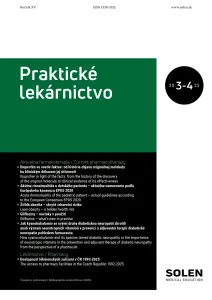

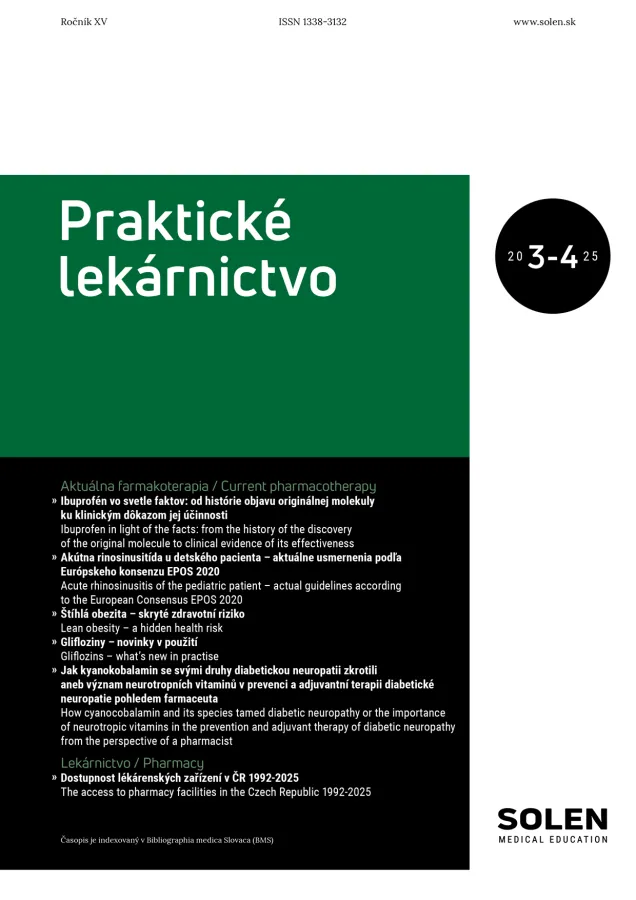
Praktické lekárnictvo 3-4/2025
Ibuprofen in light of the facts: from the history of the discovery of the original molecule to clinical evidence of its effectiveness
Ibuprofen, which was developed as a safer alternative to acetylsalicylic acid and corticosteroids for the treatment of rheumatoid arthritis with the aim of reducing adverse effects, owes its discovery to Dr. Stewart Adams. Its mechanism of action lies in the non-selective inhibition of cyclooxygenase (COX), leading to the suppression of the production of prostaglandins responsible for inflammation and pain. Clinical efficacy data evaluated by the NNT (Number Needed to Treat) parameter indicate high effectiveness, also in combination with paracetamol. Comparative studies document its use in acute pain, for example after dental extraction, where it often appears superior to paracetamol. The drug is also standardly used in indications such as migraine, tension-type headache, and primary dysmenorrhea. The pharmaceutical form and dissolution rate have a significant impact on the onset of the analgesic effect. The safety profile of the drug is characterized by better gastrointestinal tolerance compared to acetylsalicylic acid. The position of ibuprofen in modern pharmacotherapy, based on the principles of evidence-based medicine, is clinically relevant and highly established.
Keywords: ibuprofen, non-steroidal anti-inflammatory drugs (NSAIDs), rheumatoid arthritis, NNT, Stewart Adams, acute pain