

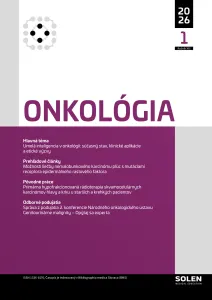
Onkológia 5/2019
Optimization of radiotherapy of high-risk prostate cancer
High-risk prostate cancer is heterogenous group where subcategories with variable prognosis might be identified to help personalize treatment. Relative value of surgery versus radiotherapy has not been compared in a randomised trial and retrospective data is inconclusive, being hampered by selection bias in retrospective series. Radiation and androgen-deprivation therapy (ADT) are mainstays of treatment for men with high-risk prostate cancer. Both modalities are supported by high level evidence and there are several strategies potentially improving treatment outcomes. Dose escalation of external radiotherapy or extreme escalation by the means of brachytherapy boost improves biochemical control albeit at the cost of higher toxicity. Several non-inferiority trials confirmed effectiveness of hypofractionation which provides preferable treatment option. The role of prophylactic pelvic nodal irradiation remains controversial and might be considered on individual basis. Duration of ADT in range of 28 – 36 months is well supported by the literature and might be optimal for most men with aggressive disease. The shortening of ADT might be considered in selected situations. The addition of docetaxel to radiation and ADT may improve failure – free survival but meta-analysis did not find that it improved overall survival.
Keywords: prostate cancer, radiotherapy, androgen-deprivation therapy, brachytherapy, docetaxel