

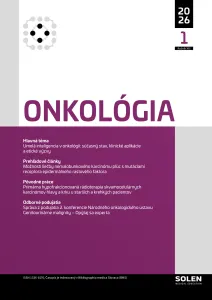

Onkológia 5/2025
Surgical strategies of cholangiocarcinoma
Cholangiocarcinoma is a spectrum of invasive adenocarcinomas originating from the biliary epithelium, classified anatomically as intrahepatic, perihilar, or distal (extrahepatic). It is the second most common primary liver malignancy and represents a highly aggressive disease with increasing global incidence. The cornerstone of curative treatment is surgical resection with negative margins (R0), accompanied by regional lymphadenectomy. Nevertheless, long-term prognosis remains poor, with five-year survival rates around 25% even after R0 resection. Current surgical strategies range from standard hepatectomies to complex procedures involving preoperative portal vein embolization, staged hepatectomies, vascular resections, and orthotopic liver transplantation. In an effort to maximize curative potential, neoadjuvant (perioperative) chemoradiotherapy protocols are gradually being implemented in clinical practice prior to surgical resection or liver transplantation. This review provides an overview of the current surgical strategies within the context of multimodal management of biliary tract cancer.
Keywords: cholangiocarcinoma, intrahepatic cholangiocarcinoma, extrahepatic cholangiocarcinoma, surgical treatment, resectability