











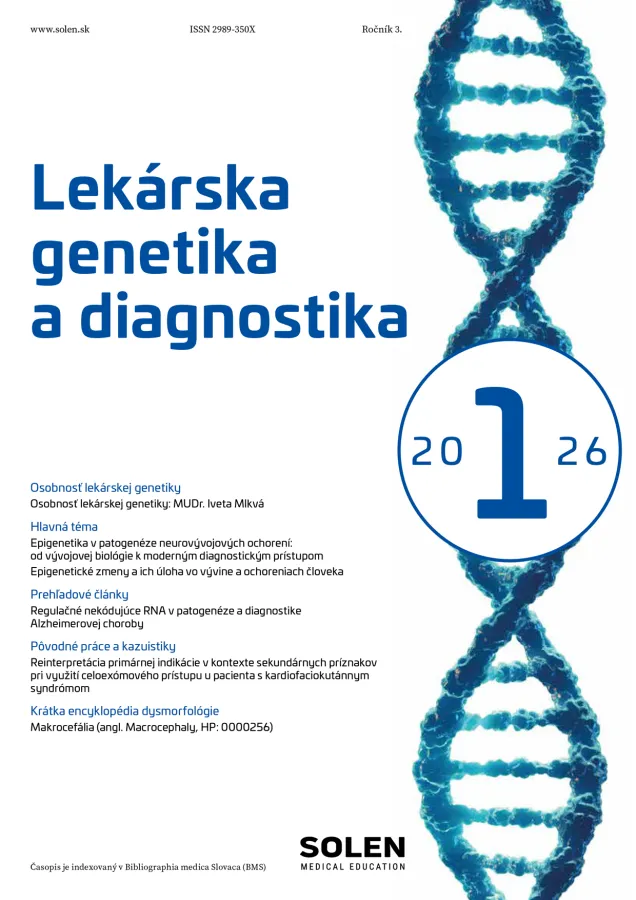
Lekárska genetika a diagnostika 1/2026
Epigenetics in the pathogenesis of neurodevelopmental disorders: From developmental biology to modern diagnostic approaches
Epigenetic regulation represents one of the key mechanisms involved in the development and pathogenesis of neurodevelopmental disorders. As epigenetics governs temporal and tissue-specific gene expression without altering the primary DNA sequence, its disruption during critical periods of development may lead to persistent neurodevelopmental impairments. Proper establishment of these mechanisms occurs already during embryogenesis through global demethylation followed by de novo methylation. Disruption of these processes may result in impaired cellular differentiation, genomic instability, and dysregulation of gene expression, thereby creating a biological basis for the emergence of neurodevelopmental disorders. Important roles are also played by factors influencing epigenome development during both prenatal and postnatal periods, particularly in the context of neuronal maturation, synaptic plasticity, and prolonged cortical maturation. Epigenetic alterations during these critical developmental windows may lead to prolonged disturbances in gene regulation and contribute to the development of neurodevelopmental disorders. Modern diagnostic approaches based on analysis of episignatures as functional biomarkers, and the 5-base genome enabling the simultaneous detection of genetic and epigenetic information, provides a novel tool for more precise molecular elucidation of the pathogenesis of neurodevelopmental disorders.
Keywords: epigenetics, DNA methylation, neurodevelopmental disorders, episignature, 5-base genome