








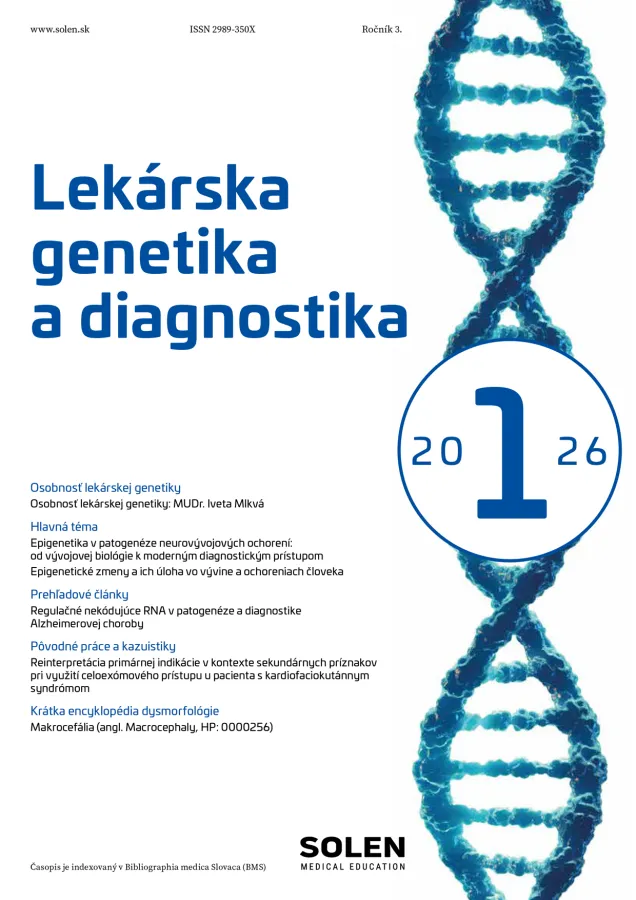
Lekárska genetika a diagnostika 1/2026
Epigenetic changes and their role in human development and disease
Epigenetics represents a critical regulatory layer linking the genome, environment, and phenotype, enabling dynamic control of gene expression without alterations in the primary DNA sequence. From the earliest stages of development, epigenetic mechanisms play a fundamental role in the transition from a totipotent zygote to specialized cell types through coordinated reprogramming of DNA methylation, histone modifications, chromatin remodeling, and regulation by non-coding RNAs. The progressive acquisition of epigenetic marks stabilizes cell-specific transcriptional programs and governs cellular and tissue differentiation. Throughout life, the epigenome undergoes continuous remodeling in response to intrinsic and extrinsic factors, with epigenetic dysregulation contributing to the pathogenesis of a wide range of diseases, including cancer, cardiovascular, metabolic, autoimmune, and neurodegenerative disorders. Particular attention is given to DNA methylation, histone modifications, non-coding RNAs, and chromatin remodeling complexes as diagnostic and prognostic biomarkers, as well as therapeutic targets. The article summarizes current knowledge on the role of epigenetic mechanisms in human development and disease pathogenesis, with an emphasis on their clinical applicability. It highlights the potential of epigenetic alterations as diagnostic, prognostic, and predictive biomarkers and underscores their importance for the development of personalized medicine based on individual epigenetic profiles.
Keywords: epigenetics, DNA methylation, histone modifications, gene expresion, diagnostic biomarkers