



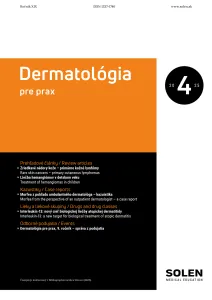

Dermatológia pre prax 1/2019
Apremilast in dermatology
Current system therapy represents in some cases a compromise between the safety and efficacy of treatment, the route of administration (injection x oral form) and the need for laboratory monitoring during treatment. In particular, the safety of treatment is an important factor in patients with psoriasis in selecting a particular treatment due to the presence of frequent comorbidities such as diabetes mellitus or cardiovascular disease. Apremilast as a selective PDE4 inhibitor increases cAMP levels and acts specifically on intracellular signaling, gene and protein expression. It reduces the inflammatory response by reducing the expression of proinflammatory cytokines TNF-alpha, IL-23, IL-17a, and increasing anti-inflammatory cytokines such as IL-10. In general, there is no influence on specific mediators of the inflammatory process but on restoring the balance of pro-inflammatory and anti-inflammatory signaling pathways (1). Apremilast has an anti-inflammatory, immunomodulatory effect, but does not induce immunosuppression.
Keywords: apremilast, psoriasis, PDE4